 Download



How the Drem Race Prize Ladder Is Shaped
Drem Pavilion 4 min read
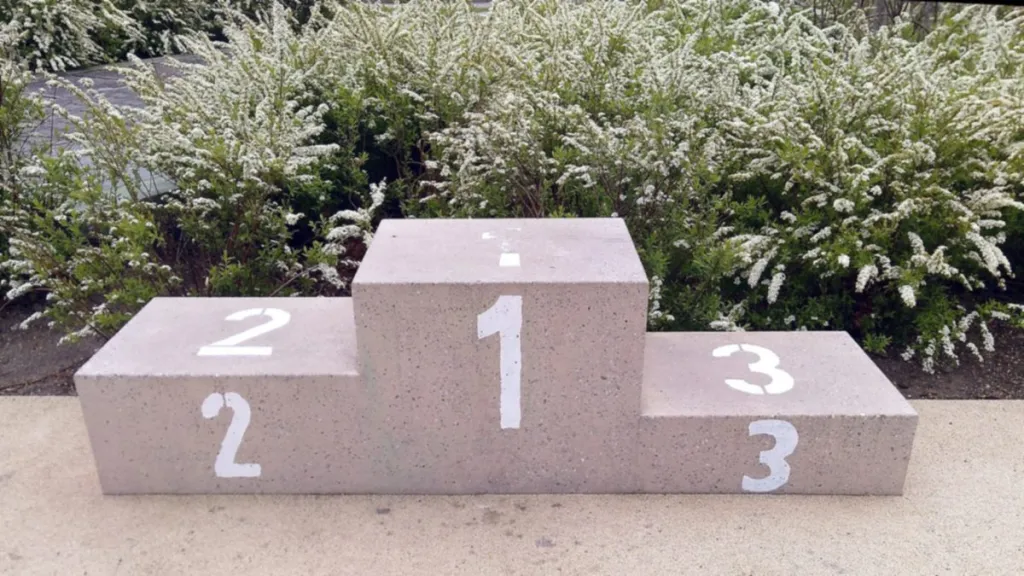
The Drem race prize ladder is steep: of the ₹30 lakh paid each day, the first ten places take ₹19.95 lakh, or 66.5%, and the other 4,990 paid places share what remains. First place alone is a quarter of the pool. The figures below were read from Drem’s public race page on 13 October 2026; the table is redrawn every day and offers change.
The top ten, rank by rank
| Rank | Prize | Share of the pool | Drop from the rank above |
|---|---|---|---|
| 1st | ₹750,000 | 25% | – |
| 2nd | ₹360,000 | 12% | ₹390,000 |
| 3rd | ₹240,000 | 8% | ₹120,000 |
| 4th | ₹180,000 | 6% | ₹60,000 |
| 5th | ₹150,000 | 5% | ₹30,000 |
| 6th | ₹105,000 | 3.5% | ₹45,000 |
| 7th | ₹75,000 | 2.5% | ₹30,000 |
| 8th | ₹60,000 | 2% | ₹15,000 |
| 9th | ₹45,000 | 1.5% | ₹15,000 |
| 10th | ₹30,000 | 1% | ₹15,000 |
| Top ten together | ₹1,995,000 | 66.5% | – |
Every one of the ten prizes is a round percentage of ₹30 lakh. Drem did not publish a formula where we could see one, so take this as arithmetic and not as a stated rule, but it suggests the ladder is drawn as shares of the pool.
Three things the shape tells you
- The top is a cliff. Second place pays less than half of first. The drop between them, ₹3.9 lakh, is larger than the whole of the second prize.
- It flattens quickly. From 8th to 10th each step is ₹15,000, and tenth place pays 4% of what first place does.
- Most winners are in the tail. 4,990 of the 5,000 paid places sit outside this table, and together they receive a third of the money.
What is left for places 11 to 5,000
| Step | Amount |
|---|---|
| Daily pool | ₹3,000,000 |
| Paid to the top ten | ₹1,995,000 |
| Left for places 11 to 5,000 | ₹1,005,000 |
| Places sharing it | 4,990 |
| Average per place | about ₹201 |
An average flatters the tail, because prizes keep falling with rank. Places 11 to 19 were listed from ₹24,000 down to ₹7,800, so those nine take somewhere between ₹70,200 and ₹216,000 between them. That leaves ₹7.9 lakh to ₹9.3 lakh for places 20 to 5,000, an average of roughly ₹158 to ₹188 across 4,981 places. The rows near 5,000th must sit below that average. We could not see them; the live table shows the prize beside each rank.
All of this assumes the full pool is paid out across exactly 5,000 places, which is how the race is described.
Compared with an even split
Shared equally, ₹30 lakh would give each of the 5,000 places ₹600. The real ladder moves that money upwards.
| Place | Even split | Actual ladder |
|---|---|---|
| 1st | ₹600 | ₹750,000, which is 1,250 times as much |
| 10th | ₹600 | ₹30,000, which is 50 times as much |
| Average of 11th to 5,000th | ₹600 | about ₹201, roughly a third |
A steep top gives the race one headline, a first prize of ₹7.5 lakh. A long tail gives it another, 5,000 winners a day. Both statements are true, and neither describes the prize a typical paid place receives.
What first place cost on the day we looked
The ranking is by amount wagered, and the leader’s total stood at ₹18,911,744. That is about 6.3 times the entire prize pool, staked by one player in one day, for a prize of ₹750,000. On games listed at 99% RTP, wagering that much costs about ₹1.89 lakh on average; on games with a lower return it costs more. We do not know which games the leader played.
A cricket way to picture it
Picture a batting card on which the opener makes a quarter of the runs, the top three make 45% and the top ten make two-thirds, with 4,990 more names below them sharing the rest. That is the race table. The total looks large, and very little of it is paid where most players stand.
Where an ordinary player stands
Take someone who stakes ₹2,000 in a day across a few games. Nobody outside can say whether that reaches the paid places, because the cut-off depends on what thousands of other players stake that day. If it does, the prize will come from the long tail, where the average is under ₹200 and the lower rows pay less than the average. Set that against the cost of the ₹2,000 itself: about ₹20 on 99% RTP games, and more on others.
How to use the race table in one minute
- Tap Race in the bottom bar and find your own position.
- Read the prize beside it, if there is one. That is the number that concerns you, not the one at the top.
- Look at the countdown, then close the table.
- Stake what you had already planned for the day, and nothing more because of a rank.
The short version
The Drem race is a prize for the very highest volume, with a wide and thin tail attached. For almost everyone it is an occasional small extra and not a target. The mechanics are on our Drem daily race page. For rewards that do not depend on out-staking anyone, see cashback on the Drem VIP page, and settle your spending first with a monthly budget in rupees.
Frequently asked questions
How much of the Drem race pool goes to the top ten?
₹19.95 lakh of the ₹30 lakh daily pool, which is 66.5%, on the figures checked on 13 October 2026. First place alone was ₹750,000, a quarter of the pool.
What is the average Drem race prize outside the top ten?
About ₹201 per place across ranks 11 to 5,000, if the whole pool is paid out. Most of those places receive less than the average, because prizes keep falling with rank.
How much did the Drem race leader wager?
The leader’s total was ₹18,911,744 when checked on 13 October 2026, about 6.3 times the whole ₹30 lakh pool. The amount changes every day.
Is the Drem daily race worth chasing?
Not by staking more than you planned. The large prizes go to the very highest volumes, and a prize from the long tail is small next to the stakes needed to move up the table.